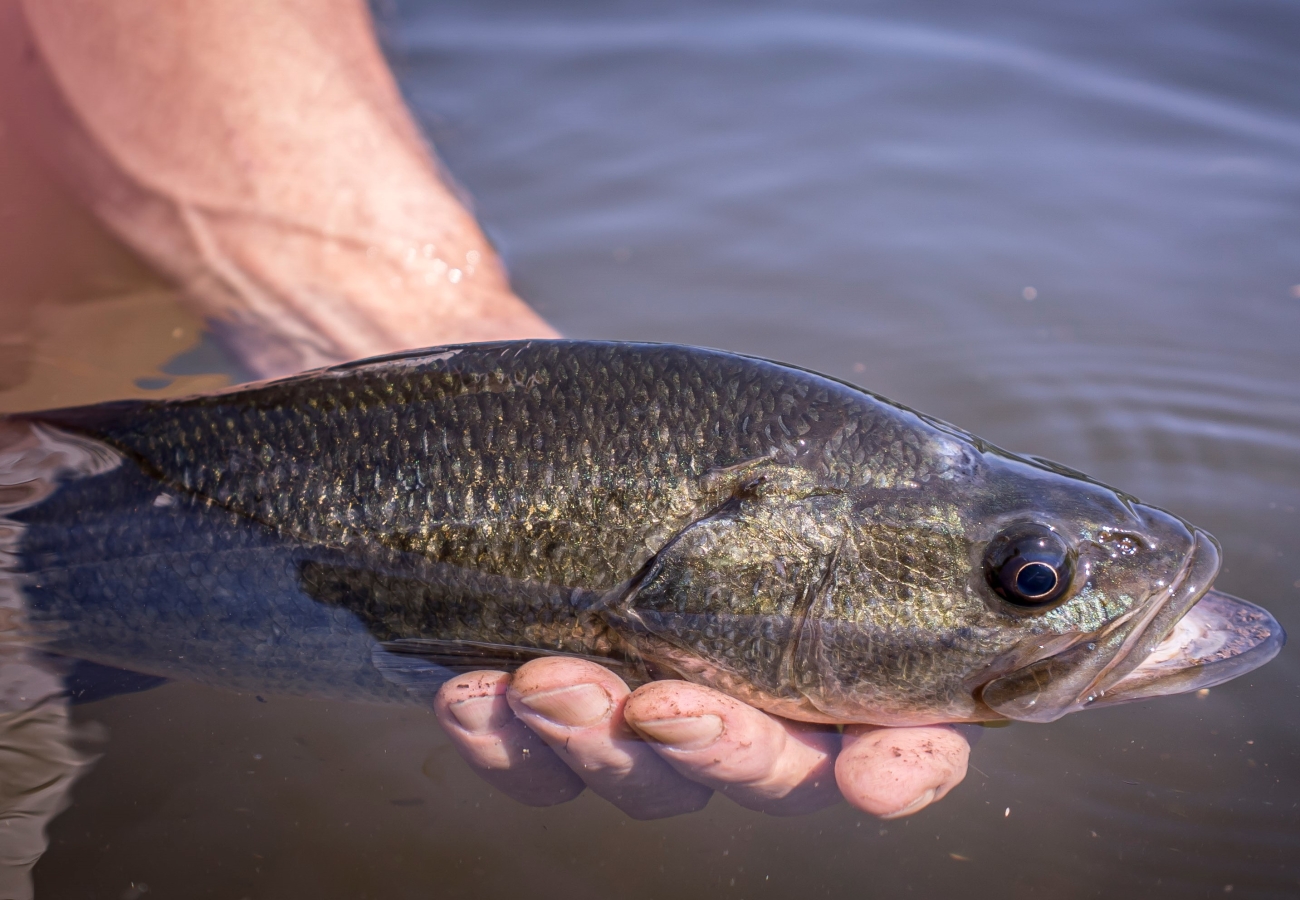
Sam Stukel / USFWS · Public domain
Species guide
Largemouth Bass
Micropterus salmoides
A heavy-bodied ambush predator commonly associated with warm, structured water and submerged vegetation.
Habitat
Vegetated lakes, ponds, swamps and quiet pools or backwaters.
Habitat supports a shortlist; it does not prove an identity. Water bodies change seasonally, and introduced populations may occur outside the best-known native setting.
Range
Native across broad parts of eastern and central North America; widely introduced beyond its native drainage.
Check a current state, provincial or national fisheries record before making a high-confidence range claim. Drainage boundaries are more informative than political borders.
Compare carefully
Separate it from smallmouth bass by checking the jaw, the horizontal side band and the deeper dorsal-fin notch—not by color alone.
When a decisive structure is hidden, record the observation as probable or unresolved. An honest uncertainty is more useful than a precise label built from incomplete evidence.
Responsible observation
Photograph the closed mouth in profile, the full dorsal fin, the cheek and the complete side pattern.
For a live fish, prepare the camera first, use wet hands when handling is unavoidable, support the body and return it promptly according to local rules.